A decision and its outcome.
- Situation
- The public brief asked for refinement of an existing Shopify store: typography, spacing, imagery and a more personal, gallery-oriented feeling.
- Decision
- I chose to build a complete, separate prototype rather than propose changes to the live store.
- Reason
- I wanted the prospective client to be able to try the changes, instead of having to imagine them from a list. I also kept the study out of search indexes to avoid competing with the real site.
- What changed
- I delivered a complete gallery that could be compared with the store. No engagement followed, and I do not know whether the artist looked at it.
Responding to the public brief
The public request was for refinement of an existing Shopify website. It emphasized typography, spacing, imagery, and an experience connected to the artist. Tappan’s restraint was a reference, with a more personal, gallery-oriented feeling as the aim.
The supplied artwork and presentation material gave me enough to build the separate study. The following sections show how I used them.
Presenting the artist and the paintings
Ned Church is the subject of the site; Arbor & Eye is the studio and family mark. The biography and process keep his first-person voice. His father’s words retain their attribution, and the Tree of Life insignia has its own chapter after the work and the artist.
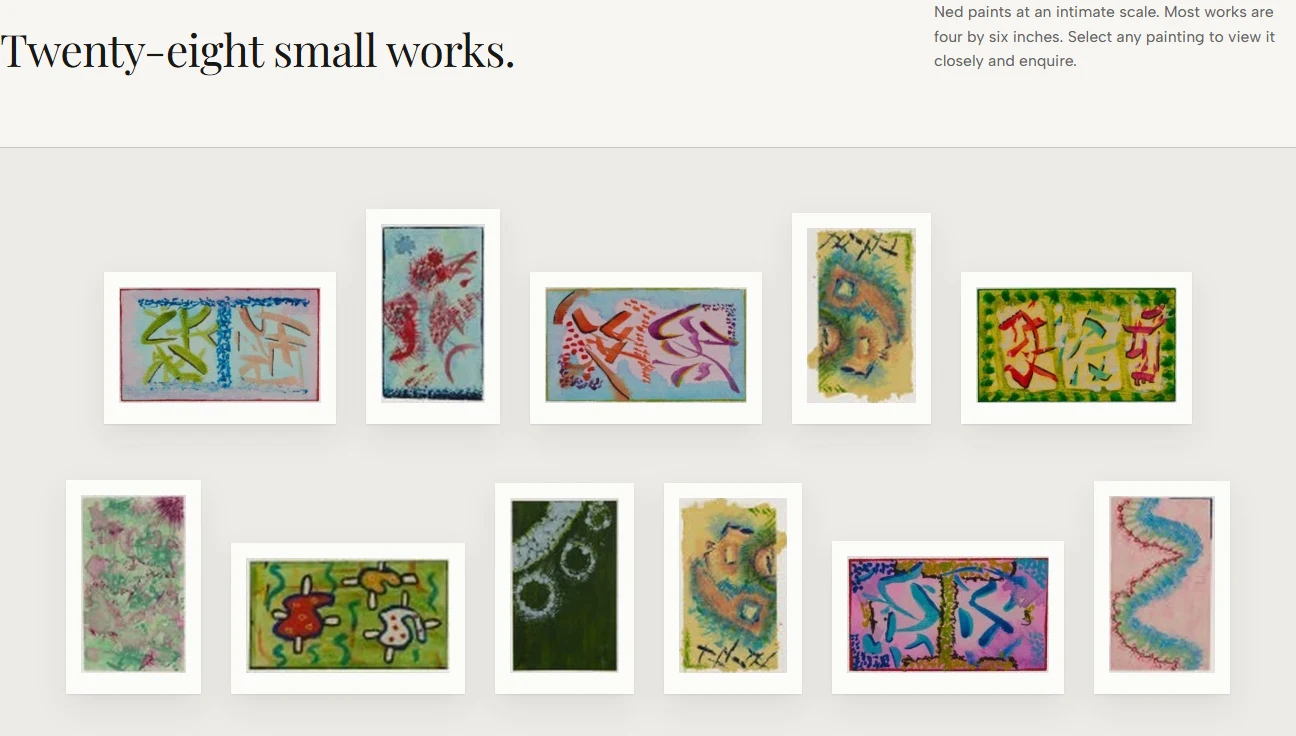
I directed a salon-wall presentation for the twenty-eight watercolors. Each opens a view with its own address, artwork details, and previous/next navigation. The catalog reproductions stay at modest sizes, respecting the resolution of the supplied images.
Using the supplied scans
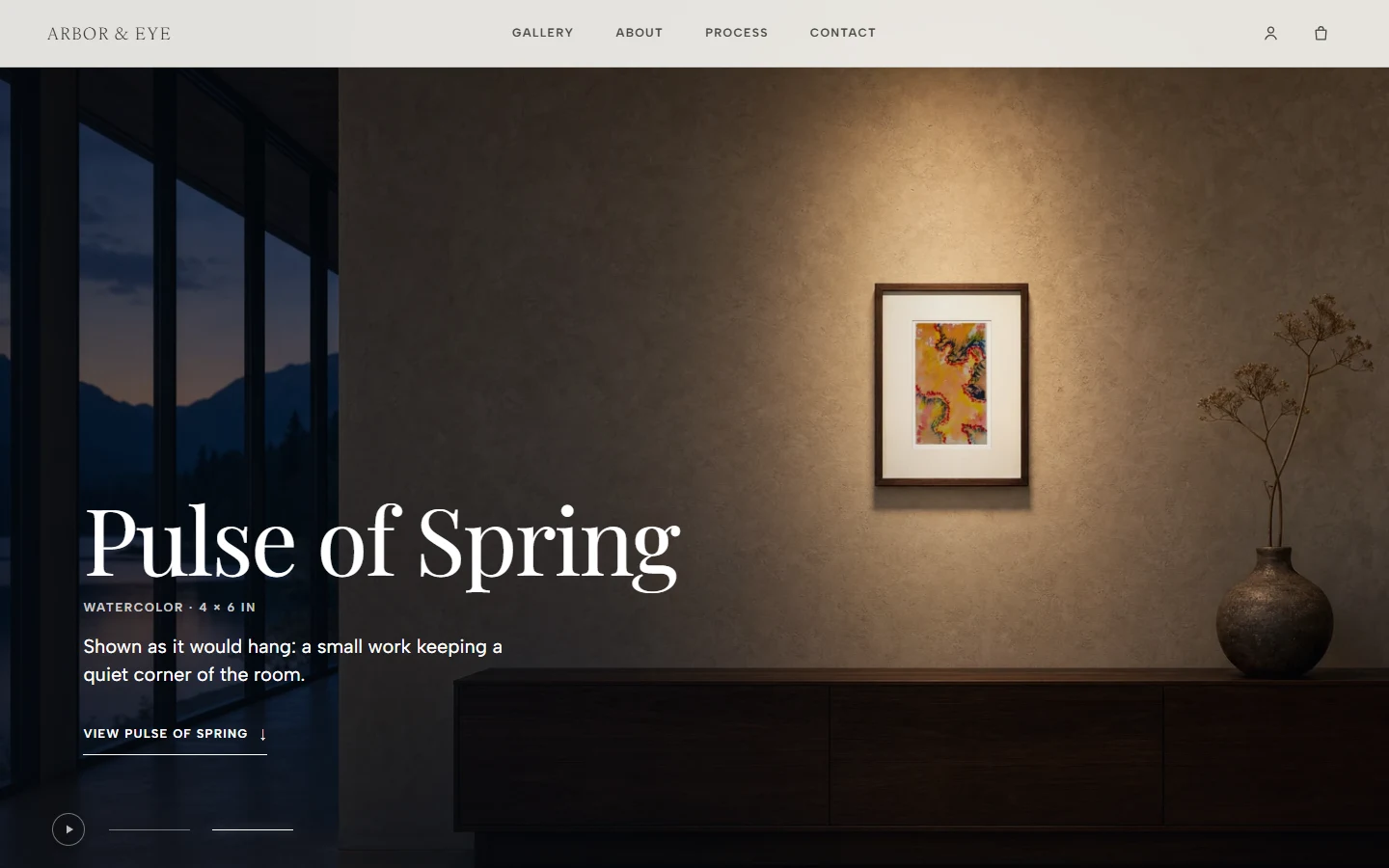
I used the supplied scans for the paintings. AI generated the empty room settings, and the artwork was placed into them locally without generative alteration.
Only the known works carry supplied names and specifications. The remaining paintings use catalog numbers and details on request. I kept prices, editions, availability, and unresolved delivery times for the studio to confirm.
Enquiring about a work
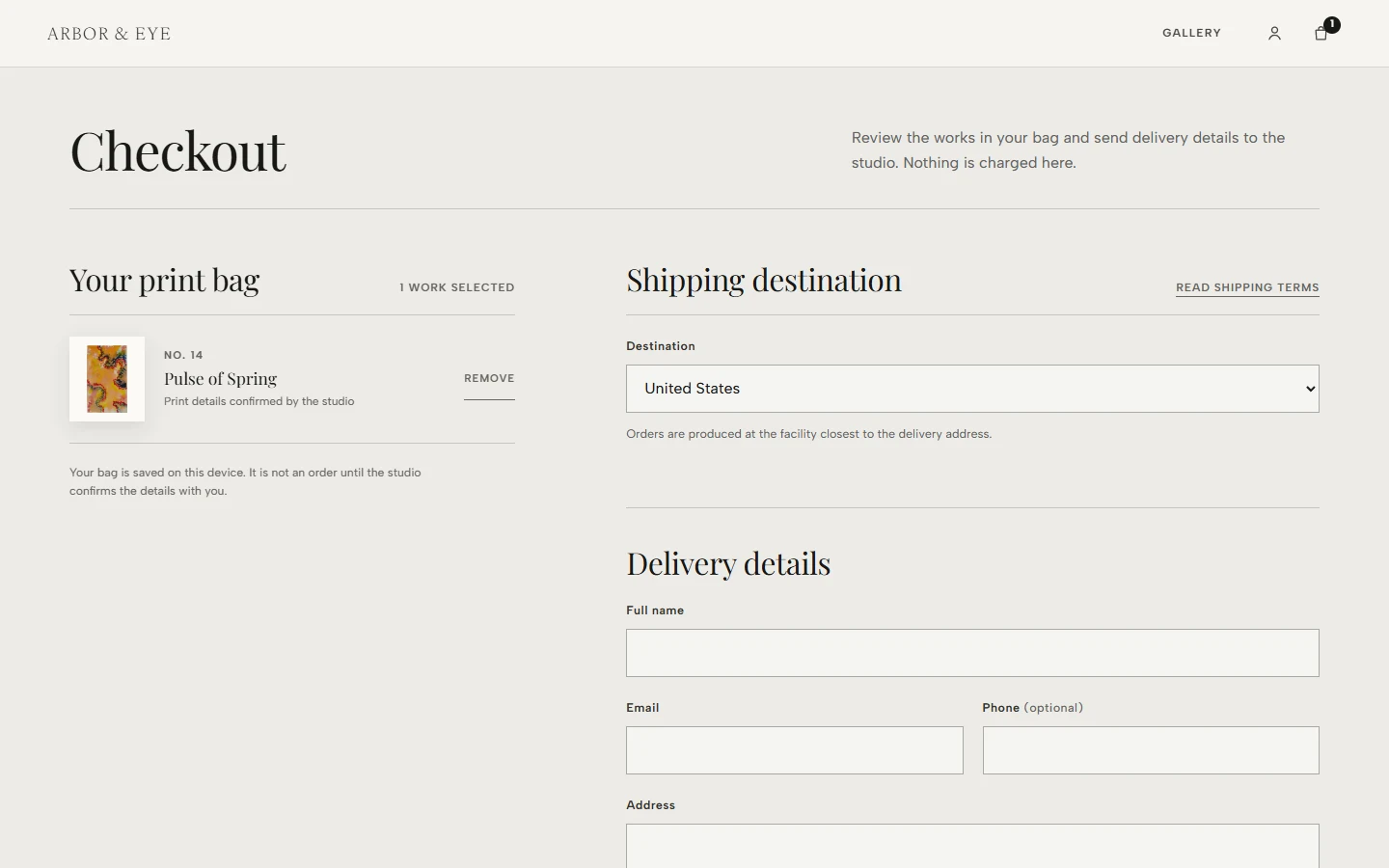
An original work has a direct enquiry link. A visitor interested in prints can gather works in a bag, choose a destination, and prepare one email with the details. The bag opens over the gallery so the paintings remain close at hand; checkout puts the selected work and form first.
The prototype collects no payment. The bag stays on the visitor’s device, and the account preview transmits no email address. The studio would still need to confirm specifications, price, availability, and delivery.