Deciding what to keep
An earlier direction for this website separated a polished front from the machinery behind it. That distinction began to feel like a gimmick, so I asked for the building and the page to be brought together. Later I questioned the building itself: the website could not be about the structure at the expense of the work.
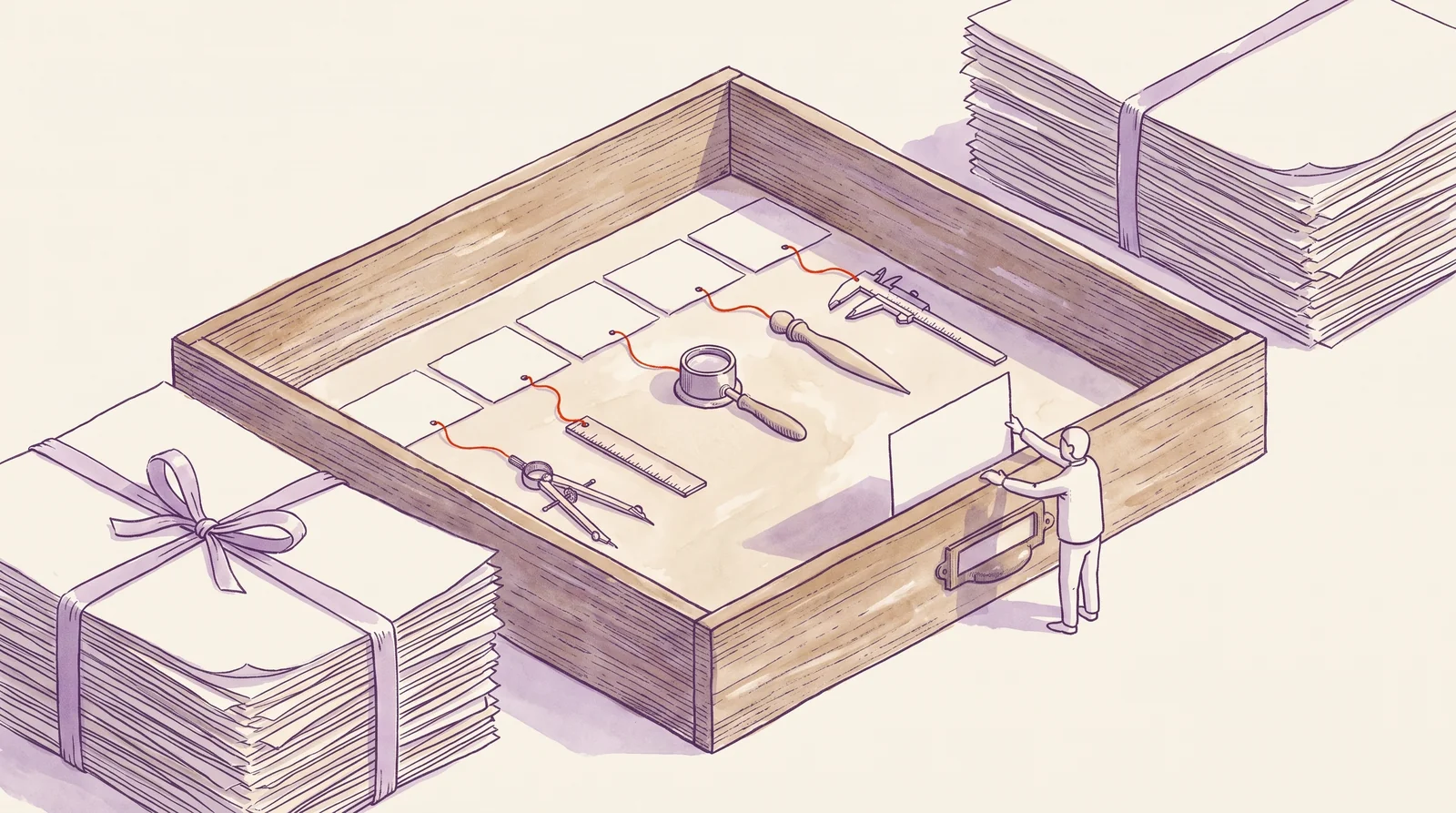
I kept the earlier drafts as a record of those choices, without giving each one equal weight on the finished page. I want the same selectivity in what agents remember: the specific misunderstanding, the procedure that worked and where the lesson applies. Repeating the whole conversation makes the next agent sort through it again.
The cost of another instruction
The offline timeclock in LaborHounds gave me another concrete choice. After review found a database conflict, I chose a primary key generated on the device so a replay could refer to the same entry without a new migration. AI implemented it; regression cases covered reloads, duplicate punches, and rejected clock-outs. The smaller change still needed those checks.
That repair is why the current source has to sit beside the project history. A remembered plan to add a migration would have missed the existing index. I combine repeated instructions and remove stale guidance so the next agent has less to sort through before it reaches the relevant evidence.
Deciding when to stop
Catchwright is the clearest example of a stop that I kept. I retired it in July 2026, preserved the engineering and did not start the proposed expansion. A saved roadmap does not reopen that decision. Before an agent begins work, I want the current outcome, how it will be judged and the stopping point to be clear.